How herbivory, mutualism, and soil microbes shape where a plant can persist
A species’ geographic distribution is an ecological pattern that emerges largely from the evolutionary process of adaptation, with the limits of that distribution often marking the boundary between adaptation and maladaptation. But most species live across complex gradients in which many biotic and abiotic conditions change together, so it is rarely obvious which factors actually set the edge of a range.
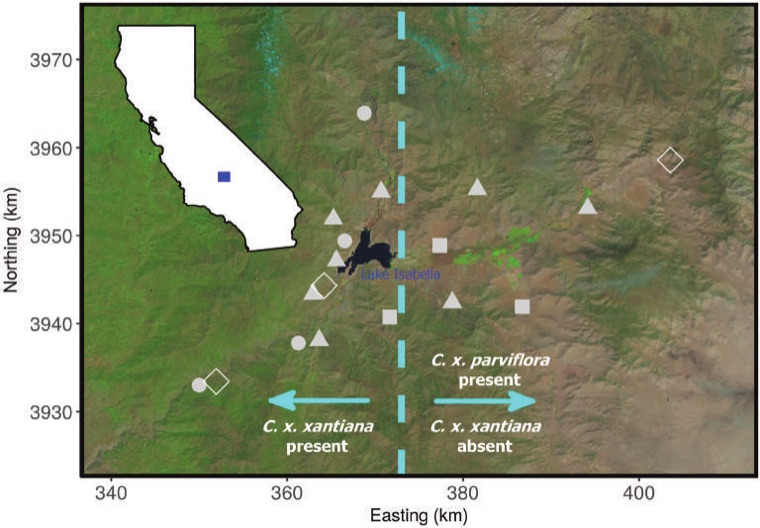
Using transplant experiments with Clarkia xantiana spanning the center, margin, and beyond-margin of its range, we tested how biotic interactions — herbivory, pollination, and mycorrhizal and soil-microbial mutualisms — combine with the abiotic environment to limit fitness and set range margins. This body of work showed that biotic interactions, not climate alone, can contribute to where a species’ range ends.
With Dave Moeller (Minnesota), Monica Geber (Cornell), and collaborators.
Key publications
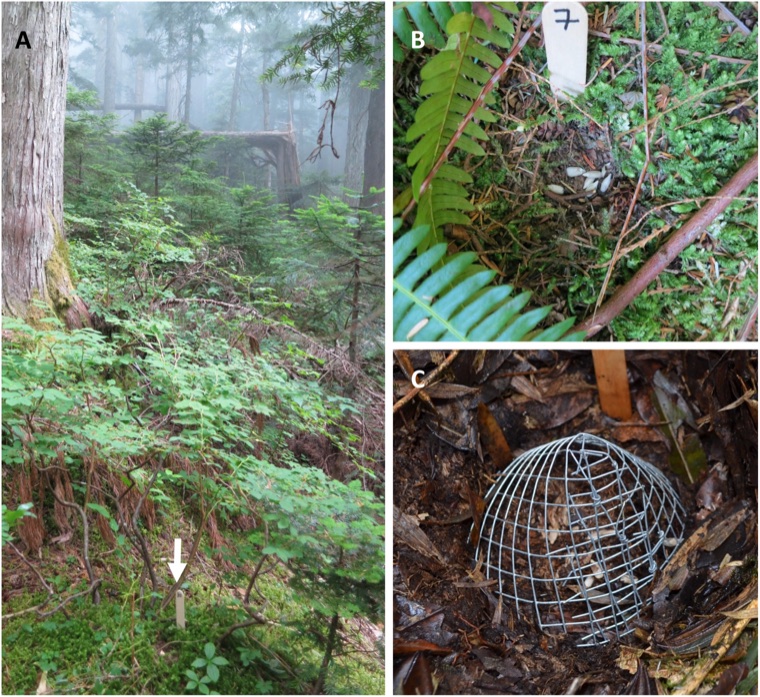
Seed predation increases from the Arctic to the Equator and from high to low elevations
Anna L Hargreaves, Esteban Suárez, Klaus Mehltreter, Isla Myers-Smith, Sula E Vanderplank, Heather L Slinn, and 5 more authors
Species interactions have long been predicted to increase in intensity toward the tropics and low elevations because of gradients in climate, productivity, or biodiversity. Despite their importance for understanding global ecological and evolutionary processes, plant-animal interaction gradients are particularly difficult to test systematically across large geographic gradients, and evidence from smaller, disparate studies is inconclusive. By systematically measuring postdispersal seed predation using 6995 standardized seed depots along 18 mountains in the Pacific cordillera, we found that seed predation intensity more than doubled from the Arctic to the Equator and from 4000 meters above sea level to sea level. Clines in total predation, likely driven by invertebrates, were consistent across treeline ecotones and within continuous forest and were better explained by climate seasonality than by productivity, biodiversity, or latitude. These results suggest that species interactions play predictably greater ecological and evolutionary roles in tropical, lowland, and other less seasonal ecosystems.
Mycorrhizal interactions do not influence plant–herbivore interactions in populations of Clarkia xantiana ssp. xantiana spanning from center to margin of the geographic range
Lana G Bolin^, John W Benning, and David A Moeller
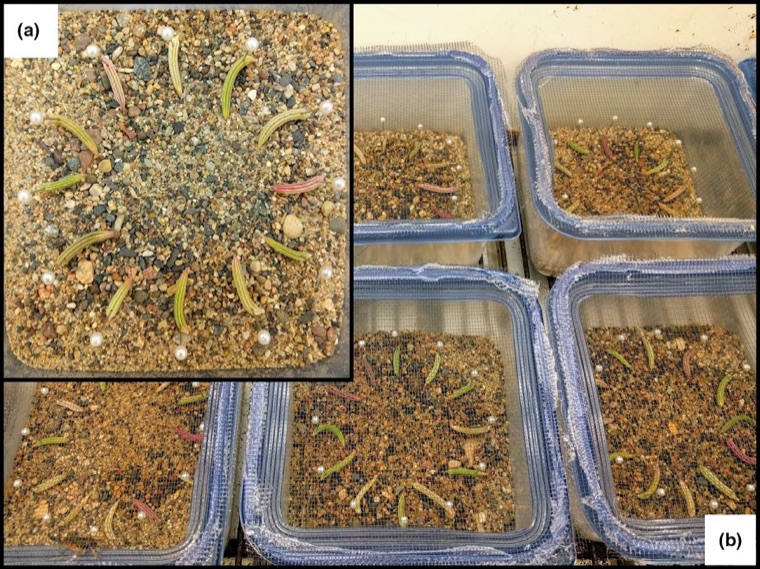
Multispecies interactions can be important to the expression of phenotypes and in determining patterns of individual fitness in nature. Many plants engage in symbiosis with arbuscular mycorrhizal fungi (AMF), but the extent to which AMF modulate other species interactions remains poorly understood. We examined multispecies interactions among plants, AMF, and insect herbivores under drought stress using a greenhouse experiment and herbivore choice assays. The experiment included six populations of Clarkia xantiana (Onagraceae), which span a complex environmental gradient in the Southern Sierra Nevada of California. Clarkia xantiana’s developing fruits are commonly attacked by grasshoppers at the end of the growing season, and the frequency of attack is more common in populations from the range center than range margin. We found that AMF negatively influenced all metrics of plant growth and reproduction across all populations, presumably because plants supplied carbon to AMF but did not benefit substantially from resources potentially supplied by the AMF. The fruits of plants infected with AMF did not differ from those without AMF in their resistance to grasshoppers. There was significant variation among populations in damage from herbivores but did not reflect the center-to-margin pattern of herbivory observed in the field. In sum, our results do not support the view that AMF interactions modulate plant-herbivore interactions in this system.
Biotic interactions contribute to the geographic range limit of an annual plant: herbivory and phenology mediate fitness beyond a range margin
John W Benning, Vincent M Eckhart, Monica A Geber, and David A Moeller
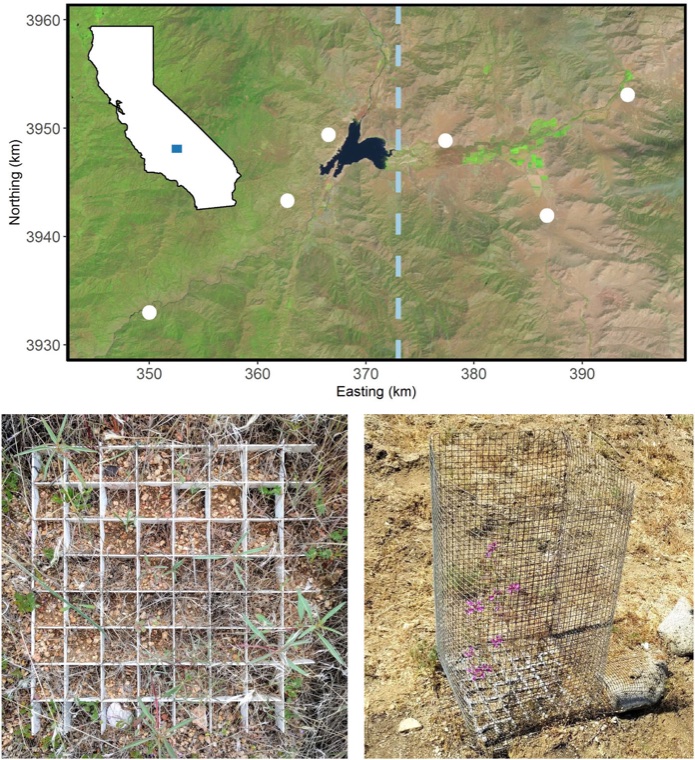
Species’ geographic distributions have already shifted during the Anthropocene. However, we often do not know what aspects of the environment drive range dynamics, much less which traits mediate organisms’ responses to these environmental gradients. Most studies focus on possible climatic limits to species’ distributions and have ignored the role of biotic interactions, despite theoretical support for their importance in setting distributional limits. We used field experiments and simulations to estimate contributions of mammalian herbivory to a range boundary in the Californian annual plant Clarkia xantiana ssp. xantiana. A steep gradient of increasing probability of herbivory occurred across the boundary, and a reanalysis of prior transplant experiments revealed that herbivory drove severalfold declines in lifetime fitness at and beyond the boundary. Simulations showed that populations could potentially persist beyond the range margin in the absence of herbivory. Using data from a narrowly sympatric subspecies, Clarkia xantiana parviflora, we also showed that delayed phenology is strongly associated with C. xantiana ssp. xantiana’s susceptibility to herbivory and low fitness beyond its border. Overall, our results provide some of the most comprehensive evidence to date of how the interplay of demography, traits, and spatial gradients in species interactions can produce a geographic range limit, and they lend empirical support to recent developments in range limits theory.
Maladaptation beyond a geographic range limit driven by antagonistic and mutualistic biotic interactions across an abiotic gradient
Species’ geographic range limits often result from maladaptation to the novel environments beyond the range margin. However, we rarely know which aspects of the n-dimensional environment are driving this maladaptation. Especially of interest is the influence of abiotic versus biotic factors in delimiting species’ distributions. We conducted a 2-year reciprocal transplant experiment involving manipulations of the biotic environment to explore how spatiotemporal gradients in precipitation, fatal mammalian herbivory, and pollination affected lifetime fitness within and beyond the range of the California annual plant, Clarkia xantiana ssp. xantiana. In the first, drier year of the experiment, fitness outside the range edge was limited mainly by low precipitation, and there was some evidence for local adaptation within the range. In the second, wetter year, we did not observe abiotic limitations to plant fitness outside the range; instead biotic interactions, especially herbivory, limited fitness outside the range. Together, protection from herbivory and supplementation of pollen resulted in three- to sevenfold increases in lifetime fitness outside the range margin in the abiotically benign year. Overall, our work demonstrates the importance of biotic interactions, particularly as they interact with the abiotic environment, in determining fitness beyond geographic range boundaries.
Microbes, mutualism, and range margins: testing the fitness consequences of soil microbial communities across and beyond a native plant’s range
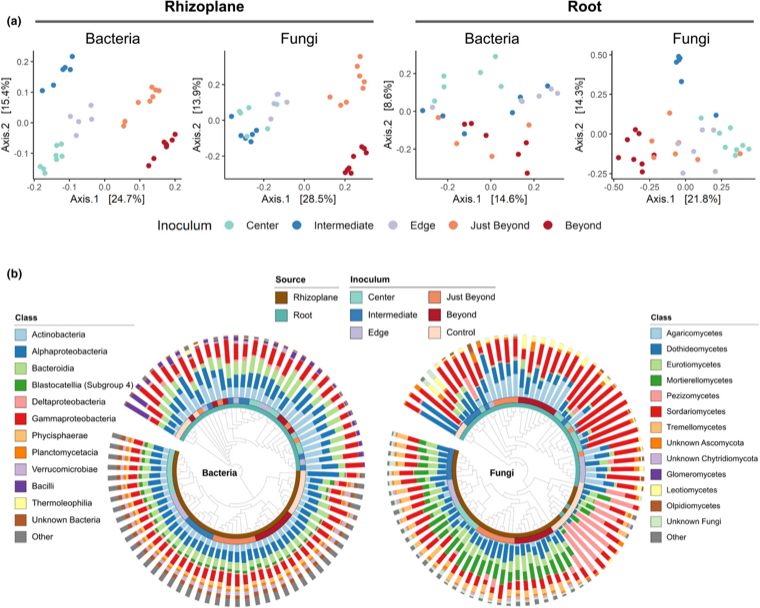
Interactions between plants and soil fungi and bacteria are ubiquitous and have large effects on individual plant fitness. However, the degree to which spatial variation in soil microbial communities modulates plant species’ distributions remains largely untested. Using the California native plant Clarkia xantiana ssp. xantiana we paired glasshouse and field reciprocal transplants of plant populations and soils to test whether plant-microbe interactions affect the plant’s geographic range limit and whether there is local adaptation between plants and soil microbe communities. In the field and glasshouse, one of the two range interior inocula had a positive effect on plant fitness. In the field, this benefit was especially pronounced at the range edge and beyond, suggesting possible mutualist limitation. In the glasshouse, soil inocula from beyond- range tended to increase plant growth, suggesting microbial enemy release beyond the range margin. Amplicon sequencing revealed stark variation in microbial communities across the range boundary. Plants dispersing beyond their range limit are likely to encounter novel microbial communities. In C. x. xantiana, our results suggest that range expansion may be facilitated by fewer pathogens, but could also be hindered by a lack of mutualists. Both negative and positive plant-microbe interactions will likely affect contemporary range shifts.
Plant–soil interactions limit lifetime fitness outside a native plant’s geographic range margin
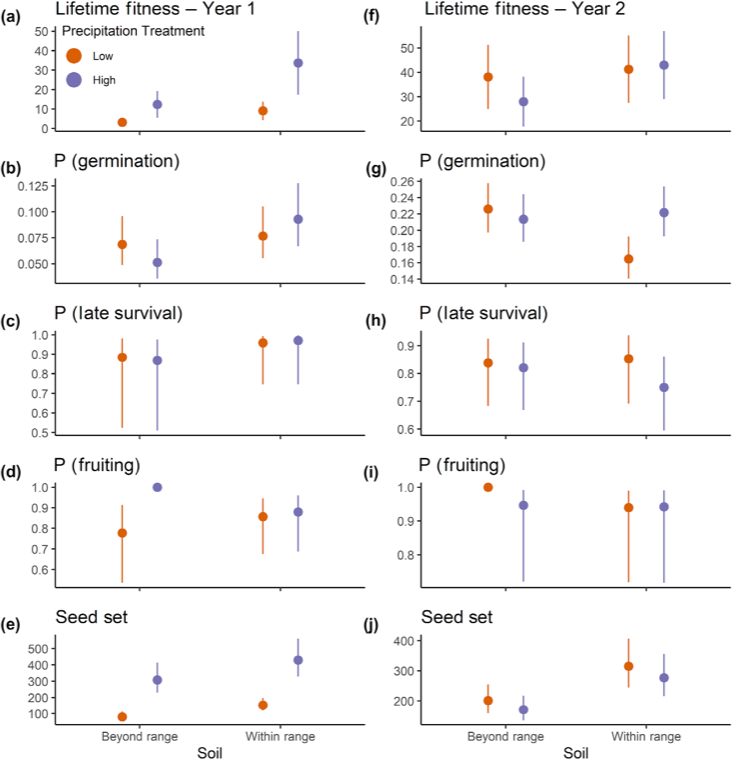
Plant species’ distributions are often thought to overwhelmingly reflect their climatic niches. However, climate represents only a fraction of the n-dimensional environment to which plant populations adapt, and studies are increasingly uncovering strong effects of nonclimatic factors on species’ distributions. We used a manipulative, factorial field experiment to quantify the effects of soil environment and precipitation (the putatively overriding climatic factor) on plant lifetime fitness outside the geographic range boundary of a native California annual plant. We grew plants outside the range edge in large mesocosms filled with soil from either within or outside the range, and plants were subjected to either a low (ambient) or high (supplemental) spring precipitation treatment. Soil environment had large effects on plant lifetime fitness that were similar in magnitude to the effects of precipitation. Moreover, mean fitness of plants grown with within-range soil in the low precipitation treatment approximated that of plants grown with beyond-range soil in the high precipitation treatment. The positive effects of within-range soil persisted in the second, wetter year of the experiment, though the magnitude of the soil effect was smaller than in the first, drier year. These results are the first we know of to quantify the effects of edaphic variation on plant lifetime fitness outside a geographic range limit and highlight the need to include factors other than climate in models of species’ distributions.