publications
*Equal contribution ^Undergraduate mentee
2026
-
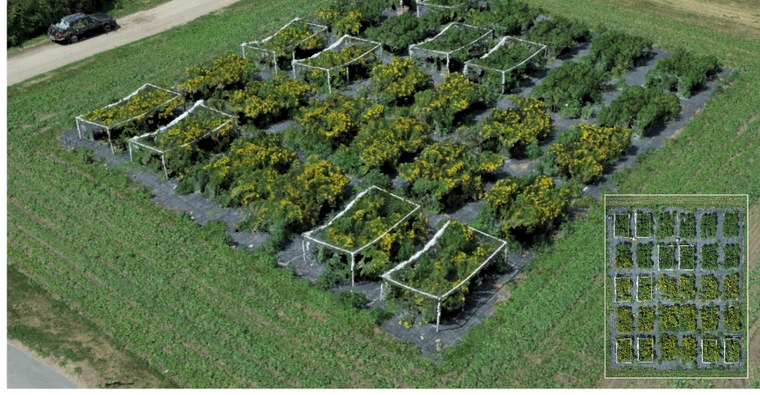 Expansion load reduces fitness at the range margin of an invasive plantRyan D Briscoe Runquist*, John W Benning*, and David A MoellerbioRxiv, 2026
Genetic drift and natural selection jointly shape how populations evolve during range expansion, yet their joint influence on fitness at expanding range margins is rarely examined. Serial founder events during range expansion may amplify genetic drift and result in the accumulation (or greater expression) of deleterious mutations at range margins, termed expansion load. Conversely, natural selection should lead to local adaptation during expansion provided that populations harbor adequate genetic variation. We used a manipulative transplant experiment, genome-wide SNP data, and demographic surveys of the invasive plant, common tansy (Tanacetum vulgare), to evaluate evidence for expansion load and local adaptation during ca. 150 years of invasion in Minnesota, U.S.A. The common garden occurred near the southern range margin and included 16 populations that span (1) a chronosequence of invasion from northeastern MN (invasion core) to southern and western range margins and (2) environmental gradients in temperature and precipitation. We also manipulated temperature and precipitation to test whether environmental stress amplified the expression of expansion load or revealed population differentiation in climate adaptation. Population fitness declined strongly with distance from the invasion core, consistent with the accumulation of expansion load. This finding was corroborated by analyses of 173 populations that showed an increase in homozygosity (F) and a decrease in population size from the invasion core to range margins. We did not find any evidence of local adaptation; a strong positive relationship between population mean fitness and environmental distance was indicative of maladaptation. While the elevated temperature manipulation reduced fitness, it did not amplify the expression of expansion load. Taken together, our results are consistent with the hypothesis that serial population bottlenecks and strong genetic drift led to expansion load and reduced fitness at range margins.
-
 To Know and Know Not: Human Genetics and the Limits to InferenceJohn W BenningEcon Journal Watch, 2026Invited review of Gregory Clark’s book, To Have and Have Not: The Determinants of Social Status in England, 1600–2026. EJW Symposium page
Gregory Clark’s To Have and Have Not: The Determinants of Social Status in England, 1600-2026 argues that differences among English people in social status measures, such as occupation, wealth, education, and property value, over the last 400 years were primarily due to genetic differences among individuals. In this commentary on the book, I argue that the analyses presented cannot support these claims about the primacy of genetics and do not bring us closer to understanding genetic vs. non-genetic sources of variation in social status. This is principally because parents transmit not only genes to offspring, but also wealth, property, connections, and culture. In the observational data on which the book bases its claims on, these streams of genetic and non-genetic transmission are strongly confounded and can produce nearly identical patterns of resemblance among relatives. Developing designs to appropriately model these two transmission streams jointly has been a major aim of the field over the past 50 years. However, in this book, a simple genetic model is fit to the data and then a patchwork of ad hoc analyses attempting to falsify a model of pure cultural transmission is presented. I argue that the quantity Clark claims to estimate as genetic heritability is actually transmissibility, an unknown compound of transmissible influences that includes genes, culture, wealth, and environment. The tests of environmental influence in the book do not convince me that non-genetic transmission is unimportant for the maintenance of social status, as the book argues. I propose an open, reproducible reanalysis of the Families of England data in this journal.
2025
-
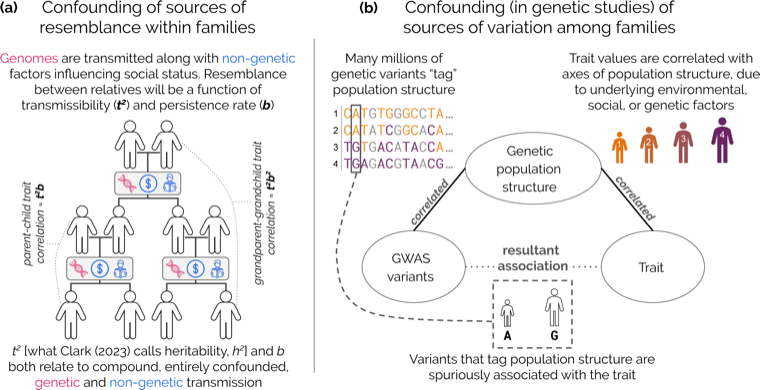 Confounding fuels misinterpretation in human geneticsJohn W Benning*, Jedidiah Carlson*, Olivia S Smith, Ruth G Shaw, and Arbel HarpakProceedings of the Royal Society B, 2025
The scientific literature has seen a resurgence of interest in genetic influences on human behaviour and socioeconomic outcomes. Such studies face the central difficulty of distinguishing possible causal influences, in particular genetic and non-genetic ones. When confounding between possible influences is not rigorously addressed, it invites over- and misinterpretation of data. We illustrate the breadth of this problem through a discussion of the literature and a reanalysis of two examples. The first paper we discuss suggested that patterns of similarity in social status between relatives indicate that social status is largely determined by one’s DNA. Our reanalysis shows that the paper’s conclusions are based on the conflation of genetic and non-genetic transmission (for example, of wealth) within families. The second paper we discuss posited that genetic variants underlying bisexual behaviour are maintained in the population because they also affect risk-taking behaviour and thereby confer an evolutionary fitness advantage through increased sexual promiscuity. In this case, too, our reanalysis shows that, though possible explanations cannot be distinguished, only one is chosen and presented as a conclusion. We discuss how issues of confounding apply more broadly to studies that claim to establish genetic underpinnings to human behaviour and societal outcomes.
2024
-
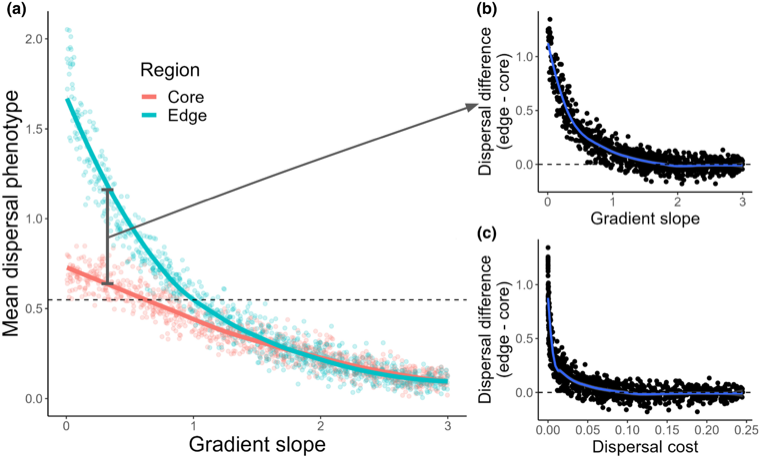 Environmental gradients mediate dispersal evolution during biological invasionsJohn W Benning, Eliza I Clark, Ruth A Hufbauer, and Christopher Weiss-LehmanEcology Letters, 2024
Rapid evolution of increased dispersal at the edge of a range expansion can accelerate invasions. However, populations expanding across environmental gradients often face challenging environments that reduce fitness of dispersing individuals. We used an eco-evolutionary model to explore how environmental gradients influence dispersal evolution and, in turn, modulate the speed and predictability of invasion. Environmental gradients opposed evolution of increased dispersal during invasion, even leading to evolution of reduced dispersal along steeper gradients. Counterintuitively, reduced dispersal could allow for faster expansion by minimizing maladaptive gene flow and facilitating adaptation. While dispersal evolution across homogenous landscapes increased both the mean and variance of expansion speed, these increases were greatly dampened by environmental gradients. We illustrate our model’s potential application to prediction and management of invasions by parameterizing it with data from a recent invertebrate range expansion. Overall, we find that environmental gradients strongly modulate the effect of dispersal evolution on invasion trajectories.
2023
-
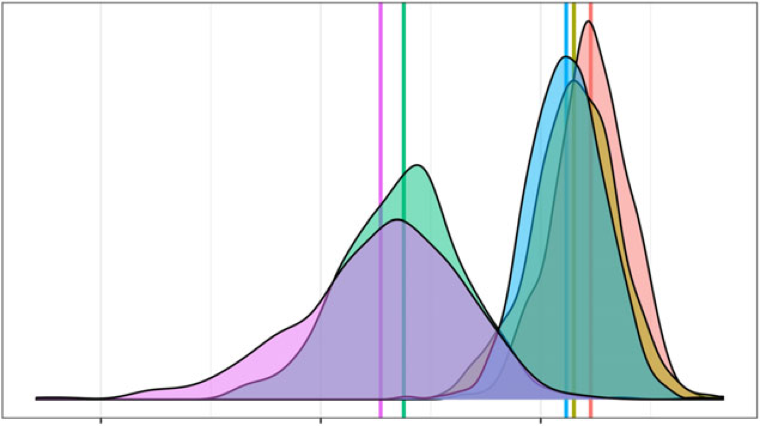 Rapid evolution during climate change: demographic and genetic constraints on adaptation to severe droughtJohn W Benning, Alexai Faulkner^, and David A MoellerProceedings of the Royal Society B, 2023
Populations often vary in their evolutionary responses to a shared environmental perturbation. A key hurdle in building more predictive models of rapid evolution is understanding this variation - why do some populations and traits evolve while others do not? We combined long-term demographic and environmental data, estimates of quantitative genetic variance components, a resurrection experiment and individual-based evolutionary simulations to gain mechanistic insights into contrasting evolutionary responses to a severe multi-year drought. We examined five traits in two populations of a native California plant, Clarkia xantiana, at three time points over 7 years. Earlier flowering phenology evolved in only one of the two populations, though both populations experienced similar drought severity and demographic declines and were estimated to have considerable additive genetic variance for flowering phenology. Pairing demographic and experimental data with evolutionary simulations suggested that while seed banks in both populations likely constrained evolutionary responses, a stronger seed bank in the non-evolving population resulted in evolutionary stasis. Gene flow through time via germ banks may be an important, underappreciated control on rapid evolution in response to extreme environmental perturbations.
2022
-
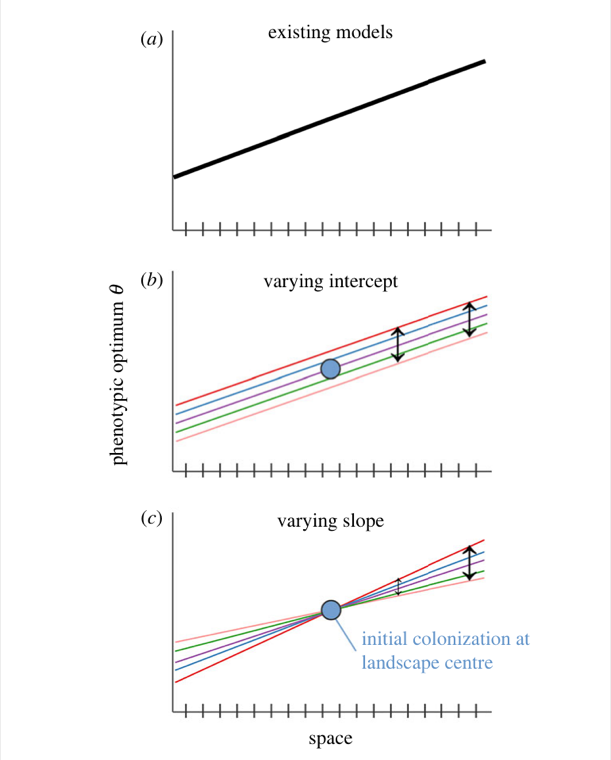 Increasing temporal variance leads to stable species range limitsJohn W Benning, Ruth A Hufbauer, and Christopher Weiss-LehmanProceedings of the Royal Society B, 2022
What prevents populations of a species from adapting to the novel environments outside the species’ geographic distribution? Previous models highlighted how gene flow across spatial environmental gradients determines species expansion versus extinction and the location of species range limits. However, space is only one of two axes of environmental variation - environments also vary in time, and we know temporal environmental variation has important consequences for population demography and evolution. We used analytical and individual-based evolutionary models to explore how temporal variation in environmental conditions influences the spread of populations across a spatial environmental gradient. We find that temporal variation greatly alters our predictions for range dynamics compared to temporally static environments. When temporal variance is equal across the landscape, the fate of species (expansion versus extinction) is determined by the interaction between the degree of temporal autocorrelation in environmental fluctuations and the steepness of the spatial environmental gradient. When the magnitude of temporal variance changes across the landscape, stable range limits form where this variance increases maladaptation sufficiently to prevent local persistence. These results illustrate the pivotal influence of temporal variation on the likelihood of populations colonizing novel habitats and the location of species range limits.
-
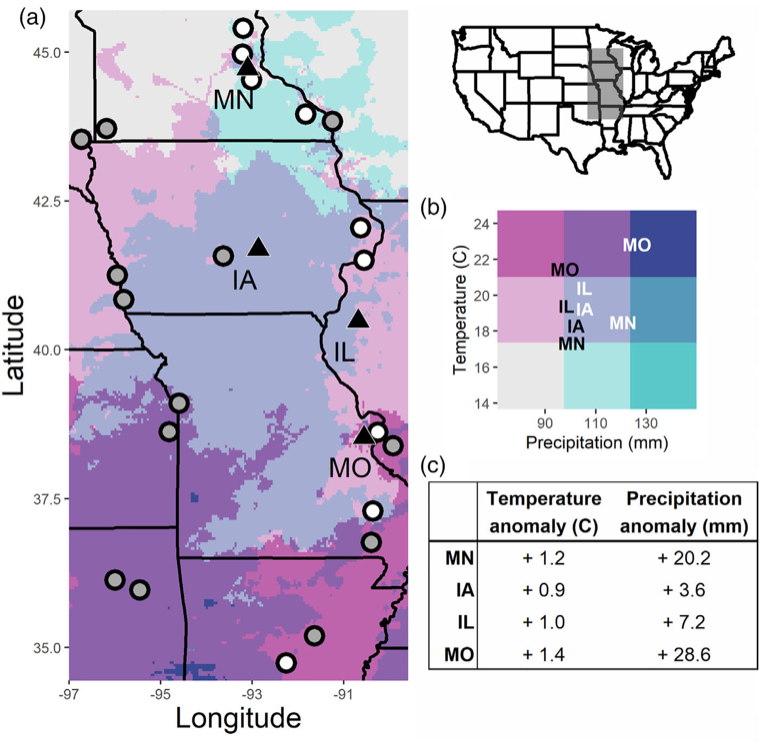 The spatial scale of adaptation in a native annual plant and its implications for responses to climate changeAmanda J Gorton*, John W Benning*, Peter Tiffin, and David A MoellerEvolution, 2022
Spatial patterns of adaptation provide important insights into agents of selection and expected responses of populations to climate change. Robust inference into the spatial scale of adaptation can be gained through reciprocal transplant experiments that combine multiple source populations and common gardens. Here, we examine the spatial scale of local adaptation of the North American annual plant common ragweed, Ambrosia artemisiifolia, using data from four common gardens with 22 source populations sampled from across a 1200 km latitudinal gradient within the native range. We found evidence of local adaptation at the northernmost common garden, but maladaptation at the two southern gardens, where more southern source populations outperformed local populations. Overall, the spatial scale of adaptation was large - at the three gardens where distance between source populations and gardens explained variation in fitness, it took an average of 820 km for fitness to decline to 50% of its predicted maximum. Taken together, these results suggest that climate change has already caused maladaptation, especially across the southern portion of the range, and may result in northward range contraction over time.
2021
-
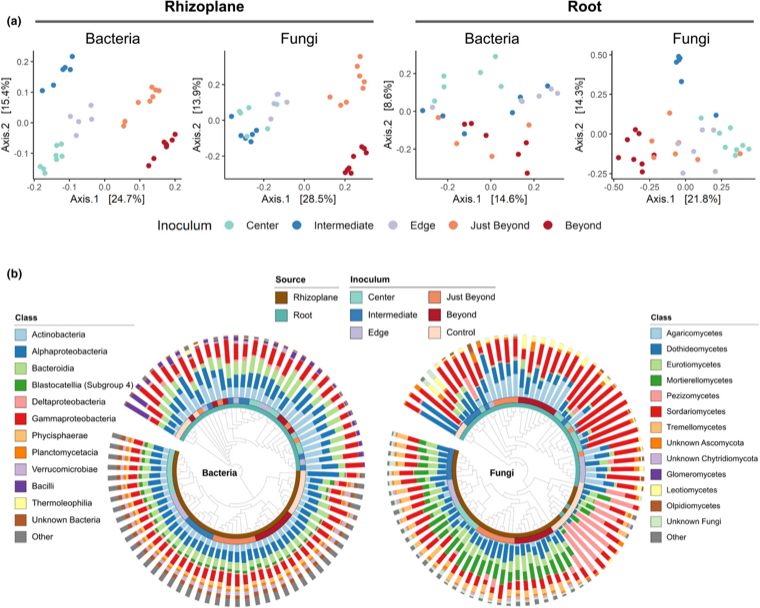 Microbes, mutualism, and range margins: testing the fitness consequences of soil microbial communities across and beyond a native plant’s rangeJohn W Benning and David A MoellerNew Phytologist, 2021
Interactions between plants and soil fungi and bacteria are ubiquitous and have large effects on individual plant fitness. However, the degree to which spatial variation in soil microbial communities modulates plant species’ distributions remains largely untested. Using the California native plant Clarkia xantiana ssp. xantiana we paired glasshouse and field reciprocal transplants of plant populations and soils to test whether plant-microbe interactions affect the plant’s geographic range limit and whether there is local adaptation between plants and soil microbe communities. In the field and glasshouse, one of the two range interior inocula had a positive effect on plant fitness. In the field, this benefit was especially pronounced at the range edge and beyond, suggesting possible mutualist limitation. In the glasshouse, soil inocula from beyond- range tended to increase plant growth, suggesting microbial enemy release beyond the range margin. Amplicon sequencing revealed stark variation in microbial communities across the range boundary. Plants dispersing beyond their range limit are likely to encounter novel microbial communities. In C. x. xantiana, our results suggest that range expansion may be facilitated by fewer pathogens, but could also be hindered by a lack of mutualists. Both negative and positive plant-microbe interactions will likely affect contemporary range shifts.
-
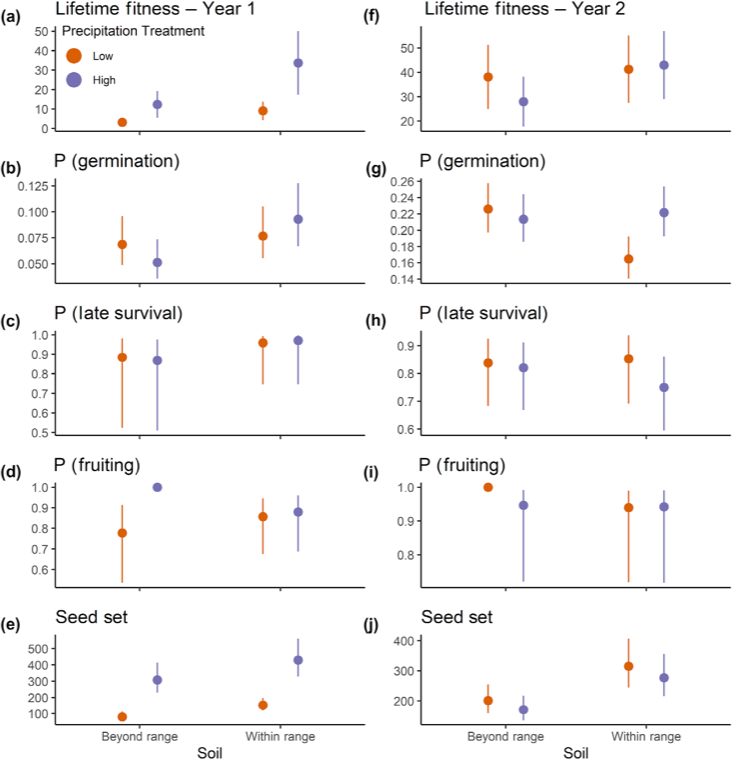 Plant–soil interactions limit lifetime fitness outside a native plant’s geographic range marginJohn W Benning and David A MoellerEcology, 2021
Plant species’ distributions are often thought to overwhelmingly reflect their climatic niches. However, climate represents only a fraction of the n-dimensional environment to which plant populations adapt, and studies are increasingly uncovering strong effects of nonclimatic factors on species’ distributions. We used a manipulative, factorial field experiment to quantify the effects of soil environment and precipitation (the putatively overriding climatic factor) on plant lifetime fitness outside the geographic range boundary of a native California annual plant. We grew plants outside the range edge in large mesocosms filled with soil from either within or outside the range, and plants were subjected to either a low (ambient) or high (supplemental) spring precipitation treatment. Soil environment had large effects on plant lifetime fitness that were similar in magnitude to the effects of precipitation. Moreover, mean fitness of plants grown with within-range soil in the low precipitation treatment approximated that of plants grown with beyond-range soil in the high precipitation treatment. The positive effects of within-range soil persisted in the second, wetter year of the experiment, though the magnitude of the soil effect was smaller than in the first, drier year. These results are the first we know of to quantify the effects of edaphic variation on plant lifetime fitness outside a geographic range limit and highlight the need to include factors other than climate in models of species’ distributions.
2019
-
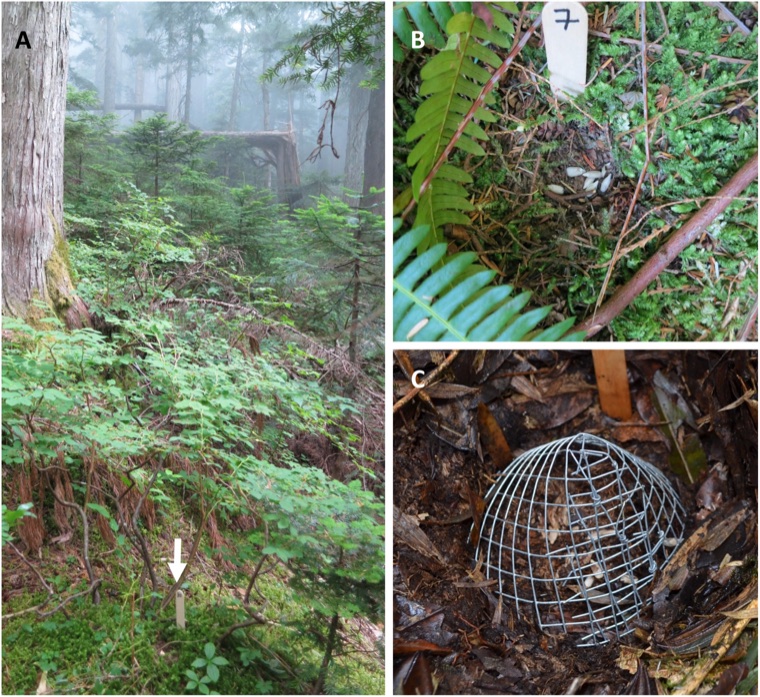 Seed predation increases from the Arctic to the Equator and from high to low elevationsAnna L Hargreaves, Esteban Suárez, Klaus Mehltreter, Isla Myers-Smith, Sula E Vanderplank, Heather L Slinn, and 5 more authorsScience Advances, 2019
Species interactions have long been predicted to increase in intensity toward the tropics and low elevations because of gradients in climate, productivity, or biodiversity. Despite their importance for understanding global ecological and evolutionary processes, plant-animal interaction gradients are particularly difficult to test systematically across large geographic gradients, and evidence from smaller, disparate studies is inconclusive. By systematically measuring postdispersal seed predation using 6995 standardized seed depots along 18 mountains in the Pacific cordillera, we found that seed predation intensity more than doubled from the Arctic to the Equator and from 4000 meters above sea level to sea level. Clines in total predation, likely driven by invertebrates, were consistent across treeline ecotones and within continuous forest and were better explained by climate seasonality than by productivity, biodiversity, or latitude. These results suggest that species interactions play predictably greater ecological and evolutionary roles in tropical, lowland, and other less seasonal ecosystems.
-
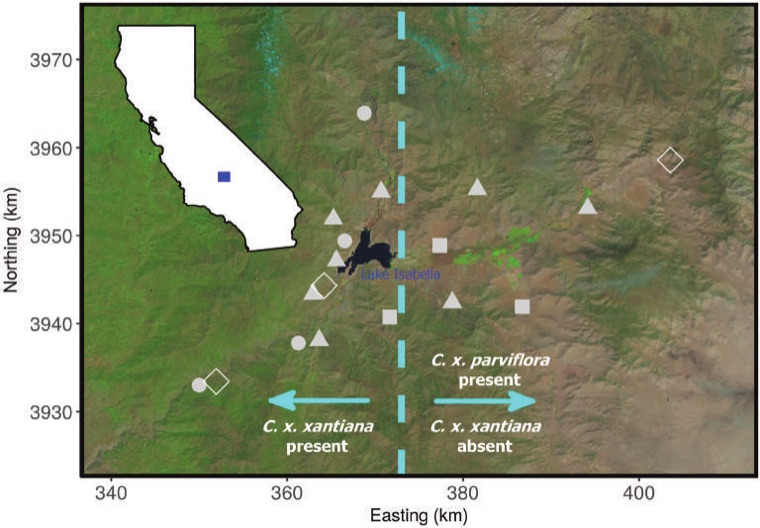 Biotic interactions contribute to the geographic range limit of an annual plant: herbivory and phenology mediate fitness beyond a range marginJohn W Benning, Vincent M Eckhart, Monica A Geber, and David A MoellerThe American Naturalist, 2019
Species’ geographic distributions have already shifted during the Anthropocene. However, we often do not know what aspects of the environment drive range dynamics, much less which traits mediate organisms’ responses to these environmental gradients. Most studies focus on possible climatic limits to species’ distributions and have ignored the role of biotic interactions, despite theoretical support for their importance in setting distributional limits. We used field experiments and simulations to estimate contributions of mammalian herbivory to a range boundary in the Californian annual plant Clarkia xantiana ssp. xantiana. A steep gradient of increasing probability of herbivory occurred across the boundary, and a reanalysis of prior transplant experiments revealed that herbivory drove severalfold declines in lifetime fitness at and beyond the boundary. Simulations showed that populations could potentially persist beyond the range margin in the absence of herbivory. Using data from a narrowly sympatric subspecies, Clarkia xantiana parviflora, we also showed that delayed phenology is strongly associated with C. xantiana ssp. xantiana’s susceptibility to herbivory and low fitness beyond its border. Overall, our results provide some of the most comprehensive evidence to date of how the interplay of demography, traits, and spatial gradients in species interactions can produce a geographic range limit, and they lend empirical support to recent developments in range limits theory.
-
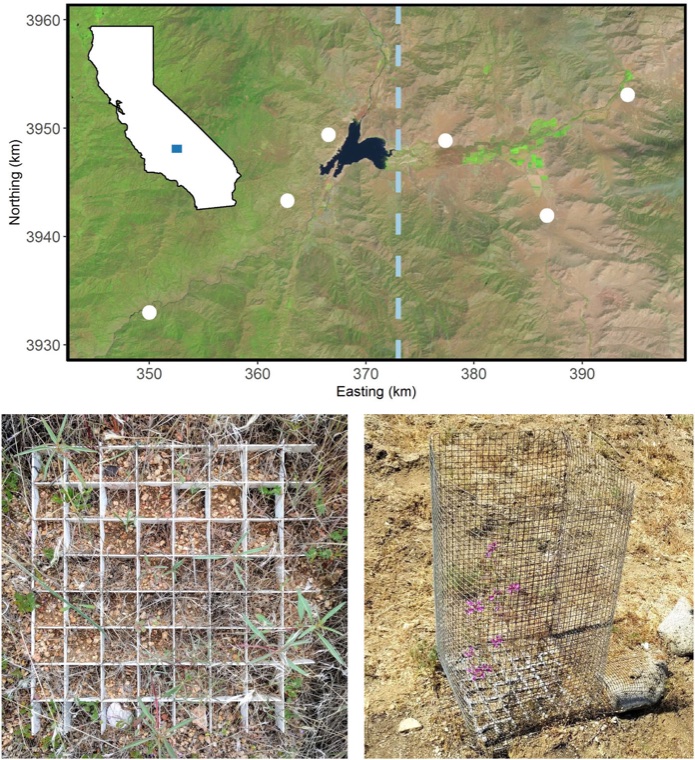 Maladaptation beyond a geographic range limit driven by antagonistic and mutualistic biotic interactions across an abiotic gradientJohn W Benning and David A MoellerEvolution, 2019
Species’ geographic range limits often result from maladaptation to the novel environments beyond the range margin. However, we rarely know which aspects of the n-dimensional environment are driving this maladaptation. Especially of interest is the influence of abiotic versus biotic factors in delimiting species’ distributions. We conducted a 2-year reciprocal transplant experiment involving manipulations of the biotic environment to explore how spatiotemporal gradients in precipitation, fatal mammalian herbivory, and pollination affected lifetime fitness within and beyond the range of the California annual plant, Clarkia xantiana ssp. xantiana. In the first, drier year of the experiment, fitness outside the range edge was limited mainly by low precipitation, and there was some evidence for local adaptation within the range. In the second, wetter year, we did not observe abiotic limitations to plant fitness outside the range; instead biotic interactions, especially herbivory, limited fitness outside the range. Together, protection from herbivory and supplementation of pollen resulted in three- to sevenfold increases in lifetime fitness outside the range margin in the abiotically benign year. Overall, our work demonstrates the importance of biotic interactions, particularly as they interact with the abiotic environment, in determining fitness beyond geographic range boundaries.
2018
-
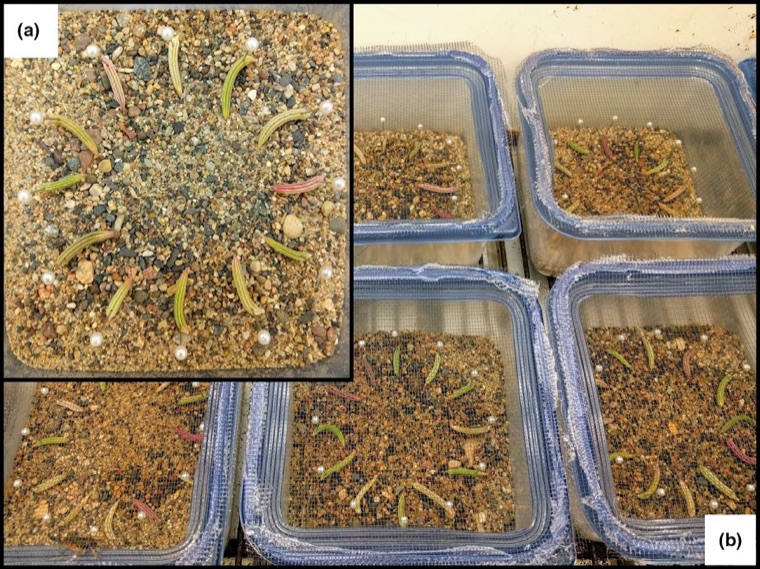 Mycorrhizal interactions do not influence plant–herbivore interactions in populations of Clarkia xantiana ssp. xantiana spanning from center to margin of the geographic rangeLana G Bolin^, John W Benning, and David A MoellerEcology and Evolution, 2018
Multispecies interactions can be important to the expression of phenotypes and in determining patterns of individual fitness in nature. Many plants engage in symbiosis with arbuscular mycorrhizal fungi (AMF), but the extent to which AMF modulate other species interactions remains poorly understood. We examined multispecies interactions among plants, AMF, and insect herbivores under drought stress using a greenhouse experiment and herbivore choice assays. The experiment included six populations of Clarkia xantiana (Onagraceae), which span a complex environmental gradient in the Southern Sierra Nevada of California. Clarkia xantiana’s developing fruits are commonly attacked by grasshoppers at the end of the growing season, and the frequency of attack is more common in populations from the range center than range margin. We found that AMF negatively influenced all metrics of plant growth and reproduction across all populations, presumably because plants supplied carbon to AMF but did not benefit substantially from resources potentially supplied by the AMF. The fruits of plants infected with AMF did not differ from those without AMF in their resistance to grasshoppers. There was significant variation among populations in damage from herbivores but did not reflect the center-to-margin pattern of herbivory observed in the field. In sum, our results do not support the view that AMF interactions modulate plant-herbivore interactions in this system.
2015
-
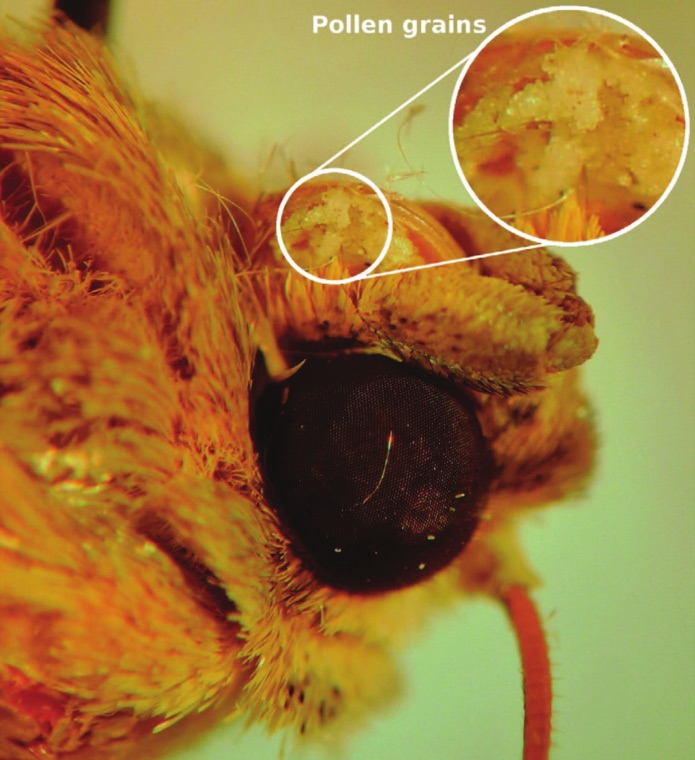 Odd for an Ericad: nocturnal pollination of Lyonia lucida (Ericaceae)John W BenningThe American Midland Naturalist, 2015
Studies of pollination biology are largely diurnally biased, especially in plant species whose flowers conform to diurnal pollination syndromes. Though these syndromes can be useful in generating hypotheses regarding a species’ primary pollinators, they may also lead to incorrect assumptions. This study explores the relative contributions of diurnal and nocturnal pollination to fruit set in Lyonia lucida, an ericaceous shrub of the southeastern United States whose floral form suggests pollination by bumble bees. Floral visitation to L. lucida and pollen loads of visitors were quantified in a population of the species in Central Florida (U.S.A.), and the relative contributions of diurnal and nocturnal pollination tested. Mating system characteristics of L. lucida were also examined. Results show L. lucida flowers are visited mainly by nocturnal moths, who are capable of carrying large pollen loads, and nocturnal pollination is the primary driver of fruit set. In addition L. lucida at the study site shows severe barriers to selfing and strong pollen limitation. This is the first time a population of an ericaceous species has been shown to be pollinated primarily by nocturnal floral visitors and suggests pollination biologists should not be so quick to discount these potentially important pollinators.